Rediscovering the Woman God Created Me to Be
Updated: Aug 17
What I Wish I Had Known at Twenty-Eight
A devotional I read recently stopped me in my tracks. One thought in particular lingered with me: God can bring beauty out of our mistakes and good out of circumstances we wish we could undo.
As I sat with those words, I found myself thinking about the woman I was at twenty-eight. My reaction surprised me. Part of me cringed. Part of me felt compassion. And part of me felt enormous relief. I was grateful not to be twenty-eight anymore.
Those years were filled with insecurity, longing, disappointment, and confusion. I spent a great deal of energy worrying about things I could not control and building my identity around things that were never meant to define it. What I could not see at the time was that God was already at work in those struggles.
Romans 8:28 has been my favorite verse for most of my adult life:
"And we know that in all things God works together for good for those who love Him, who have been called according to His purpose."
I have leaned on that promise through cancer, heartbreak, disappointment, uncertainty, and seasons when nothing seemed to make sense. Only years later did I recognize what was really happening. God was working through all of it.
If I could sit down with that younger version of myself today, there are many things I would tell her.
Most of all, I would tell her not to build her entire identity around roles she hoped to fill or relationships she hoped would fulfill her.
I would tell her to become a whole person—not independent from God, but deeply rooted in Him; not isolated from others, but not dependent on them to define her worth.
That lesson took me many years to learn. What I couldn't see then was that I already possessed some of the qualities I would spend decades trying to rediscover.
As a girl, I spent countless hours exploring orange groves, sagebrush-covered hillsides, and dirt roads on horseback. I was curious, adventurous, and eager to see what might be around the next bend in the trail. Later, in my early twenties, I explored the mountains of East Tennessee in my first truck, wandering back roads simply because I wanted to know where they led.
Long before I understood anything about identity, confidence, or relationships, I loved adventure. Somewhere along the way, that part of me gradually went quiet.
By my early twenties, I had already lived through a divorce. Although I didn't fully understand it at the time, I was carrying a great deal of unresolved pain, shame, and disappointment from earlier chapters of my life. I was eager to move forward, but I had not yet done the deeper work of understanding how those experiences had shaped me—or how much they influenced my choices.
When I met my second husband, I married quickly. What astounds me now is how completely I made him the center of my world.
I wanted to be loved, chosen, and secure. I wanted the sense of belonging that I believed marriage would bring. Those desires were not wrong.
I poured myself into the relationship and contorted myself into the kind of wife I thought I was supposed to be—and the kind I believed he desired. I also hoped to be a mother, and that longing became the focus of my life over the next several years.
Looking back, I can see how distorted my view of myself had become during those years..
Early in my marriage, I babysat the toddler of a fellow engineer my husband worked with. He often spoke highly of her intelligence, and I knew they worked closely together. He respected her. He admired her.
At the time, I experienced those comments through the lens of my own insecurity. In fairness, I doubt he intended to make me feel inadequate.
She seemed to represent a world he valued. Meanwhile, I was babysitting her child.
Years later, I realized I didn’t truly envy this woman or want her life. But I remember seeing qualities in someone else that seemed important to him and wondering whether I possessed any worth of my own.
Looking back, the issue was never her career or my role. It was the habit of measuring my value against other people.

Around that same time, we became involved in foster care and began exploring new avenues to build a family.
I knew those efforts were meaningful, yet I was still searching for a purpose that felt certain and lasting.
I was a new and immature believer at the time. I had been baptized about a year after our marriage. I found myself torn between what I thought a "perfect" Christian wife should be and the old insecurities that still wanted to measure my value by worldly standards.
Wrestling with those insecurities, I eventually stepped away from foster care for a time and returned to school to pursue engineering. I enjoyed math and science, but engineering also represented a world I believed my husband respected. Maybe, somewhere deep down, I thought he would admire me if I succeeded at that.
Yet even while I was succeeding academically, I remained emotionally dependent in ways I did not recognize. I had learned to do well in school as an adult, but I struggled to figure out how to translate that success into a meaningful place in the world.
My husband traveled frequently for work. I hated being home alone at night. I closed the blinds against the dark windows and waited for his nightly phone call. I didn't feel safe alone, even though I was not naturally a timid person. He would tell me where he had eaten dinner, who he had met with, and what he had done that day. As I listened, his world seemed expansive while mine felt increasingly small.
What I did not understand at the time was that my sense of security had become too dependent on another person's presence.
More than anything, I felt as though I didn’t measure up.
In hindsight, I can see that much of my identity had become wrapped up in romantic relationships.
I had female friends at different stages of life, but I struggled to build the kind of close friendships I longed for. Part of that may have been rooted in my childhood. We moved frequently, and friendships were often interrupted just as they were beginning to deepen.
The irony is that while I kept many friendships at arm's length, I poured enormous emotional energy into romantic relationships. At the time, I thought I was simply being devoted. I wanted to love well and be loved in return.
Somewhere along the way, I became part of other people's worlds instead of continuing to build my own. If a relationship felt secure, I felt secure. If it felt distant or uncertain, I felt unsettled.
Human relationships are precious gifts, but they were never meant to carry the full weight of our identity. Somewhere along the way, I had reduced my understanding of womanhood to a much narrower picture than Scripture presents. Yet the biblical picture of a godly woman was never one-dimensional. The woman described in Proverbs 31 loves her family deeply, but she is also resourceful, productive, courageous, generous, and engaged with the opportunities God places before her.
In many ways, I was beginning to rediscover the adventurous girl who had once explored orange groves, mountain roads, and whatever might be waiting around the next bend.
One thing that surprises me now is that some of my boldest and most adventurous seasons happened when I was not in a relationship at all. When I was single, I tended to take more risks, trust myself more, and move through the world with a greater sense of freedom. I explored new places, pursued new interests, and worried less about whether someone else approved of my choices.
Then I would enter a relationship, and without realizing it, I often built my life around it. Gradually, parts of me would shrink. I became less focused on my own growth and more focused on being loved, accepted, and secure. I don't think I was unusual in that regard. I was searching for things that most people search for—love, marriage, children, family, and belonging. Those are not shallow desires. They are some of the deepest desires we have.
The problem was never the desires themselves. The problem was the weight I placed on them. I expected them to provide a sense of identity, security, and significance that they were never designed to carry.
When I was single and adventurous, I wasn't necessarily happier. But I was often more connected to parts of myself. In relationships, I sometimes traded pieces of that connection for approval, security, or belonging.
It took me many years to realize that healthy relationships should not require us to lose ourselves. They should leave room for us to continue becoming the people God created us to be. For me, that meant learning not to set aside the parts of myself God had placed there—the curiosity, independence, creativity, and desire to keep growing that had been part of me long before I entered a relationship.
If I could offer one piece of advice to a young woman today, it would be this: become a whole person before you join your life with someone else. Learn who God created you to be. Develop your gifts, your faith, your friendships, and your sense of purpose. A healthy relationship can enrich those things, but it should never replace them.
It took me many years—and several unexpected chapters—to learn that lesson.
One of the most unexpected chapters began after a cancer diagnosis left me struggling financially and searching for a path forward. A chance conversation eventually led me to a job cleaning houses and, later, to my own cleaning business.
It was not the future I had imagined while earning a degree and considering medical school.
Yet it became one of the most transformative experiences of my life. During those years, I spent countless hours listening to books, talk radio, sermons, and podcasts. While I was cleaning houses, I was also learning, growing, and gradually developing a deeper understanding of both myself and others.
Over time, customers trusted me with their homes, their stories, and sometimes their emergencies. I walked with people through grief, illness, aging, divorce, and loss. Life has a way of happening while you're cleaning someone's house. Sometimes that meant sharing a cup of coffee and listening. Other times it meant helping during a medical emergency or once even catching a snake in a customer's house.
What began as a way to earn a living became an education in people.
More importantly, it became one of the first places where I felt genuinely valued by people who were neither family members nor romantic partners.
What I never anticipated was that something I did out of desperation would help restore my self-respect.
My customers appreciated my work, but they also trusted me. They confided in me. Some became friends.
For someone who had spent years questioning her worth, that trust was quietly transformative.
Yet the greatest change during those years was not simply that I gained confidence or learned to see value in myself.
The greatest change was that I learned to surrender.
Life had stripped away many of the plans I thought would define me. My health was uncertain. My finances were limited. Many of the things I wanted most were beyond my control.
For perhaps the first time in my life, I stopped trying so hard to force outcomes and began depending on God day by day.
That dependence was not dramatic. It was often quiet and steady. It looked like learning to lean on God through everyday life. It looked like trusting Him through uncertainty. It looked like accepting that many of the things I wanted most were ultimately outside my control.
I cannot say I learned that lesson perfectly, and I am still learning it today. But those years taught me that peace is often found not in gaining control, but in surrendering it.
God often works that way.
The things that seem ordinary from the outside sometimes become the places where He does His deepest work.
One of those places, for me, turned out to be friendship.
Years later, after my stem cell transplant, and especially after moving to Middle Tennessee, another area of growth began to take root: friendship.
I had friendships before, but this was different. For the first time, I began to experience a genuine sense of belonging.
Part of that was circumstance. By then, Tennessee had become home rather than another temporary stop along the way. For perhaps the first time in my life, I was putting down roots instead of assuming I would eventually move on. I had also become more comfortable in my own skin and less fearful of reaching out to people.
There was nothing remarkable about it. It grew through conversations over coffee, lunch dates, game nights, and visits with neighbors. Simple moments that gradually became meaningful relationships.
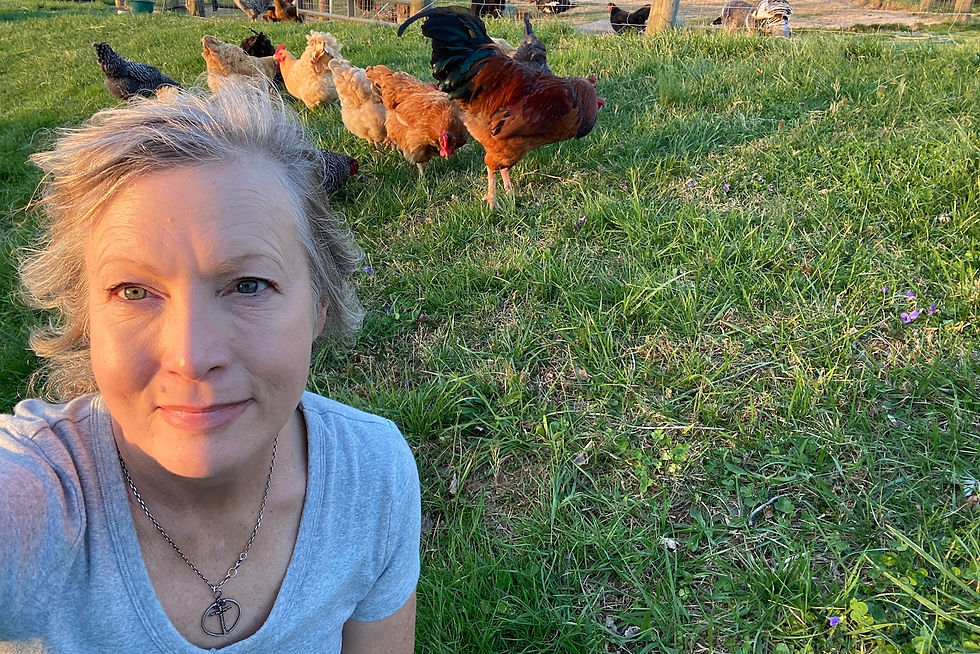
Today, I am still very much an introvert. My favorite place is usually at home caring for animals, working in the garden, cooking, writing, or tending the life God has given me. A packed social calendar sounds exhausting rather than exciting.
Yet I have learned that meaningful friendships add something precious to life.
Perhaps one of the greatest surprises of the last decade has been realizing that people often enjoy spending time with me more than I ever believed they did.
For most of my life, I knew God loved me. I knew my family loved me. What I struggled to believe was that I mattered very much outside those relationships.
God has used ordinary friendships, kind neighbors, loyal customers, church communities, and countless small interactions to challenge those assumptions. Not all at once, but gradually.
In the same patient way He was teaching me surrender, He was teaching me belonging.
Another lesson I wish I had learned earlier is that becoming a whole person sometimes means continuing to grow even when the people closest to you don't share your interests.
For years, I often set aside things that would have helped me grow because the people around me weren't interested in them. If they didn't want to go, I stayed home. If they weren't interested, I convinced myself I shouldn't be either.
Over time, I learned that healthy relationships allow room for differences. One person may enjoy social gatherings while another prefers quiet evenings at home. One may want to join a Bible study, volunteer, take a class, pursue a hobby, or develop a new interest while the other has no desire to do so.
I eventually realized that I didn't have to stop growing simply because someone else chose a different path.
Some of the healthiest decisions I ever made involved stepping out on my own, joining a group, attending an event, investing in friendships, pursuing interests, and cultivating the gifts God had given me.
Ironically, many of the things I once thought were evidence of confidence began long before I actually felt confident.
I earned my degree. I took dance classes. I trained in Taekwondo and eventually earned a black belt. I competed in fitness events. I made major cross-country moves on my own.
I wasn't confident.
I was courageous.
Confidence came later. Courage came first.
What I failed to recognize at the time was that God was doing far more than helping me become more confident. Each small act of courage was teaching me to rely less on other people's approval and more on His. Slowly, He was teaching me where my identity belongs—not in marriage, accomplishments, or other people's opinions, but in Him.
The woman I was at twenty-eight could not have imagined where the next thirty years would lead. Much of it was harder than I expected, and much of it looked nothing like the future I had planned.
Yet Romans 8:28 proved true. Not because everything that happened was good, because it wasn't. Not because every decision was wise, because some weren't. And not because every season was easy, because many were not. It proved true because God was faithful.
He brought beauty out of mistakes, growth out of disappointment, and purpose out of circumstances I never would have chosen.
The older I get, the more convinced I am that God was not taking something from me during those difficult years. He was patiently giving me back parts of myself I had forgotten as He shaped me into the woman He created me to be.
One final lesson I have learned is that contentment is not the same thing as having everything you want.
When I was younger, I often believed contentment was waiting on the other side of the things I longed for most. If I could just have the life I imagined, then I would finally feel settled and complete.
Over time, I discovered that contentment doesn't come from obtaining every dream. It comes from learning to trust God in the middle of the story, not just at the end of it.
I still have dreams. I still wonder what might be around the next bend in the road. The difference is that those dreams no longer determine my peace. I can be grateful for what God has given me today while still looking forward to what He may have for me tomorrow.
Contentment and hope are not opposites. In fact, I think they belong together.
The Bible is full of people who hoped for things they could not yet see. Their hope was rooted not in circumstances, but in God Himself. Perhaps that is why I have come to believe that contentment is not the absence of desire. The absence of desire often looks more like resignation or apathy. Contentment, on the other hand, is full of life. It leaves room for hope, curiosity, growth, and new dreams.
I have learned to hold my desires with open hands, trusting that God is good whether He grants them, changes them, or asks me to wait. An open hand can still hold something. It simply holds it differently—without the grip of fear or the weight of demand.
If I could sit down with that twenty-eight-year-old woman today, I would tell her that she matters far more than she realizes. I would tell her that she does not need to earn significance or become someone else to be worthy of love. Most of all, I would tell her that God is already at work in her story, even in the chapters she wishes she could rewrite.
And I would tell her to keep hoping.
Not because every dream will come true exactly as she imagines, but because the God who writes the story is faithful.



Wise post
Love it!